Sunday, March 12, 2006

Kansas weather.


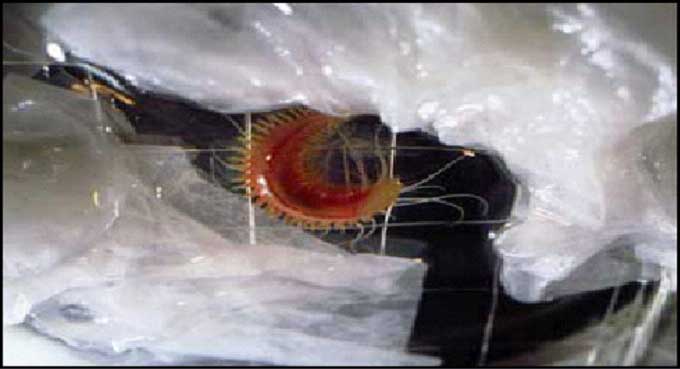
Kansas weather is never boring. This morning around 8:00 I was in the shower when my wife yelled tornado! So grabbed my pants and cell phone as wind came up over the sirens. No damage here but Lawrence was hit pretty hard with what is either a series of microbursts or a tornado. Some pretty good sized trees were knocked down but the damage was very spotty. Right know power is out to much of the city. We are being told to stay home. Good advice since a new set of storms is on the way.

Image/Text/Data from the University of Illinois WW2010 Project. Used with permission.

Other links:

Was it a Tornado?

Microbursts

Tornados

Thursday, March 09, 2006

Lynx


I am getting to hate those funny graphical alphanumeric patterns we use to validate posts in blogger and in other contexts. It seems that the patterns get more and more difficult to handle. Consider the one displayed with this post. I had to really think about the second letter from the right or third letter: is the sequence hm or is it really fim?

Now I have a bit more sympathy with my students who sometimes can't interpret my writing.

That said, pondering these graphics got me wondering, what do the visually impaired do on the web? And that got me fondly remembering Lynx. Lynx for those who don't know is a text based web browser and it was the first web browser I used. At that time, I was a visiting professor at Wasburn U in Topeka and all we had were text terminals. Oh, we could go to the library and use Mosaic's graphics browser but it was so buggy it was not worth it.

Lynx is really compact and fast and even when I finally got a machine with a graphical interface, it was fun to boot the Mac version of Lynx on my Quadra 650 just to see what it would do with my site. My site does not work all that well with Lynx but trying it out with Lynx convinced me that maybe all the frames I was using in my frame happy days probably are not such a good idea. In Lynx you can see the original vision of hypertext that gave rise to what we think of as the web today.

I am pleased to see Lynx still around. Hmmmm supposedly it has been ported to PDA's. Maybe I will see if I can get Lynx for mine.


Other Links:

Blynx: the use of Lynx with speech synthesizers.

Pages enhanced for Lynx: Some of these links don't work, but I see that Kermit lives as well! YES!!!

Water!


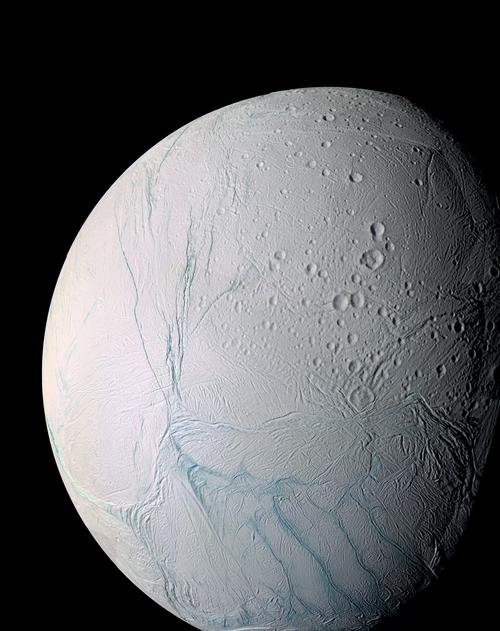
Finally it is really raining here which means that my garden will get water and the salamanders will run. But my yard is not the only place for water. According to NASA the Cassini probe seems to have detected liquid water in a very unlikely place-Saturn's moon Enceladus. The report claims that images from Cassini show plumes of some substance being ejected from moon's surface and the best physical explanation is that the plumes are liquid water from the Enceladus analog of a cold Old Faithful. Quantities of water has been found in other parts of the solar system but to have it so close to the surface, in what is a presumably a very cold part of the solar system, is unusual.


Perhaps Enceladus is a place to look for life, assuming of course the rest of the chemicals for life are present and the heat source is stable.

Here is how scientists think the water might be produced.

I am not going to get too excited about this but each little discovery of this sort makes it more and more plausible to think that there may be life in other places in the Universe.

Other Links:

Cassini home page

(http://saturn.jpl.nasa.gov/home/index.cfm)

SETI Institute (www.seti.org)

Monday, March 06, 2006

A pop music digression

If you are wondering science and poetry consider this wonderful post from Sandra Porter's Blog: Discovering Biology in a Digital World. Her post is about how plants somehow detect volatile organic compounds given off by other plants when the latter are attacked by insects. The listening plants get advanced warning and mobilize their defenses. But what I really love is the title of the post:

"I hear the cottonwoods whispering above"

Naturally this got my interest

This the first line of a song Tammy sung by Debbie Reynolds in 1957 in the movie "Tammy and the Bachelor"; the lyrics are here and here.

"I hear the cottonwoods whispering above
Tammy! Tammy! Tammy's in love!

The ole hootie owl hootie-hoo's to the dove
Tammy! Tammy! Tammy's in love!

Does my darling feel
What I feel
When he comes near?
My heart beats so joyfully
You'd think that he could hear!"

Wonderful!

The song appears to be widely recorded but I have never heard it.

As an aside the song was composed by Jay Livingston & Ray Evans who wrote many well known standards including:

Mona Lisa and Silver Bells and
Que SerĂ¡, SerĂ¡. Now those I have heard. Unfortunately most people today may be more familiar with one of their least inspiring efforts, the theme song from the 1960's TV series, Mr. Ed.

Other links:

http://www.lucyfan.com/jaylivingston.html

http://www.answers.com/topic/ray-evans

Salamander Travels


Lest you think the Lawrence salamander rescuers are an odd lot, a quick Google search using salamander migrations as search terms reveals the following links and tidbits:


Salamander Crossing(http://www.artworking.com/salamander/index.htm) discusses a mass migration of amphibians in Brattleboro Vermont and the activities of salamander rescuers:

"Environmental groups in the region report that a large-scale salamander migration, with creatures numbering in the hundreds, took place during Tuesday evening's rainstorm.

"Some were running right across the road, others were just taking their time," said Betsy Bennett, curator and educator of the Grafton Nature Museum. "We helped some of them across the road when cars came. It was really fun."

As temperatures reached the 50s during the downpour, about 10 local citizens came out to witness the natural spectacle, Bennett said. Museum officials and local residents watched the migration take place at a beaver brook on Townshend Road."


Jug Bay Wetlands Sanctuary near Washington DC (http://www.jugbay.org/jugbay/research/marbled.html) conducts research documenting migrations of the marbled salamander Ambystoma opacum shown in the accompanying picture from their web site.

Karen Luepke (http://www.nmu.edu/biology/Jill/Migration/Migration%20Pages/salamander/index.htm) provides a nice discussion of migration in the spotted salamander, Ambystoma maculatum, along with helpful links. She note several things about salamander migrations. First the migrations are very predictable from year to year and at least for the spotted may require more than just the right weather. Also the salamanders seem to be very faithful to the pond they were born in and never stray far, only to about 200m from the pond.


The Federal Highway Administration reports (http://www.fhwa.dot.gov/environment/wildlifecrossings/salamand.htm) on the building salamander tunnels in Amherst MA, not too far from where I grew up. See also http://www.fhwa.dot.gov/environment/wildlifecrossings/.

As for the homing aspect of migration between the breeding pond and feeding areas, some writers hypothesize a scent component but in newts at least, experimental evidence suggests that magnetic orientation analogous to that used by some birds in migration may be used. See Phillips, JB 1986 Two magnetoreception pathways in a migratory salamander. Science Aug 15;233(4765):765-7 (Abstract). Of course it is quite possible that several different orientation cues are involved.

Saturday, March 04, 2006

Salamandering

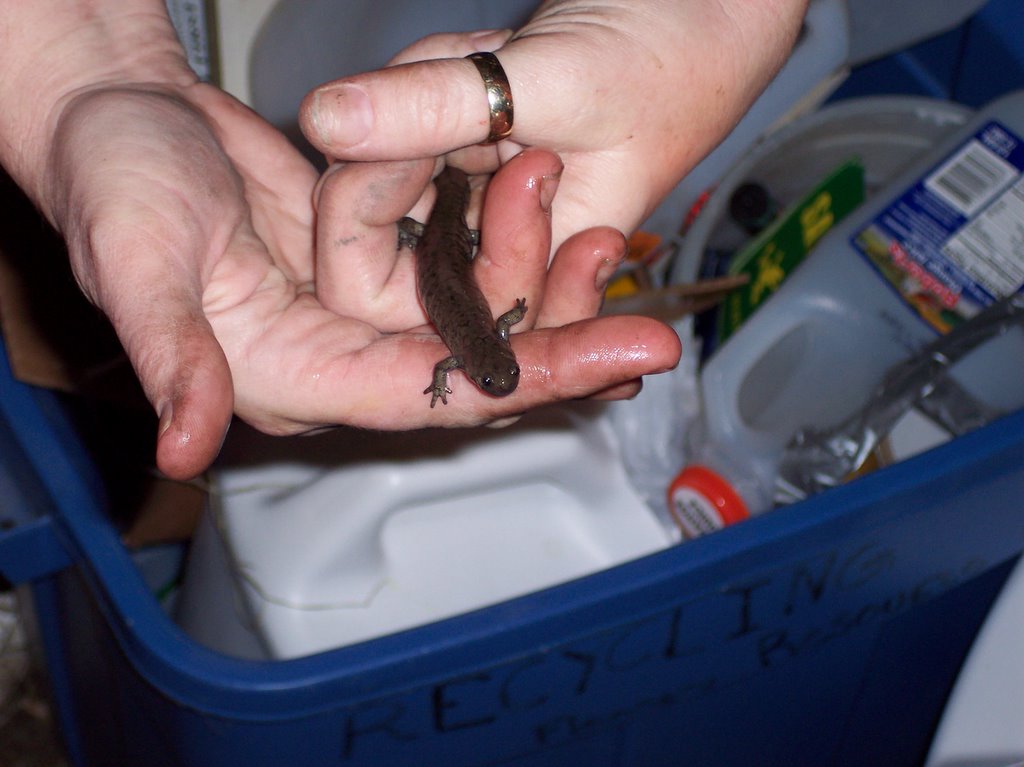
Tonight I joined about 12 other people along 31st Street in Lawrence in a 'salamander rescue' to ferry salamanders Ambystoma texanum across the road to and from their breeding grounds.

I know the typical reaction: good grief get a life; and many probably agree with one of the editorial writers from the Journal World (http://www2.ljworld.com/news/2006/mar/04/oh_no/?editorials_jw) who noted:

"The silly season is upon us again and this time it is even sillier than usual. There i’s a local coalition actually trying to organize a mass effort to help salamanders cross a section of 31st Street that supposedly keeps them from making their appointed reproductive rounds."

Of course this whole thing is bound up in a local debate concerning a by-pass through the Baker Wetlands:

"Is this for real, for serious, or just another ploy to impose even more barriers to completion of the South Lawrence traffic way? There is a history of foolishness for political purposes reaching back to the infamous and elusive northern crawfish frog, a species that at one time was considered “threatened."


Well you get the drift.

I am astounded that in the 21st century a supposed educated person doesn't understand the importance of biodiversity and the effects of human activity on wildlife habitat. But I guess some people still cling to notion that the planet was made for us to plunder.

At any rate, we did find 41 salamanders as best as I could tally. Of course the one hitch was uncertainty as to what the salamanders wanted to do. My instinct was to hunt them on the north side of the road figuring they would want to head toward the main body of the wetlands on the south side. But people seemed to be finding the salamanders heading north. However, since we did not get a whole lot of rain, the amphibians were clearly not actively crossing the road.

Dr. Joseph Collins of KU says that at the end of January a student saw the salamanders migrating from the north to the south. But my son Norman who knows the Baker wetlands very well, much better than I, says the salamanders are much more abundant on the south side during the summer, consistent with Dr. Collin's understanding. Perhaps when we get some real rain, we will get a clearer idea of what the salamanders want.


For me the rescue brought back memories of high school when Thom Smith of the Berkshire Museum would lead a group of us on mad salamander hunts in spring rains in Massachusetts. There the quarry was often other Ambystoma species such as the spotted salamander.

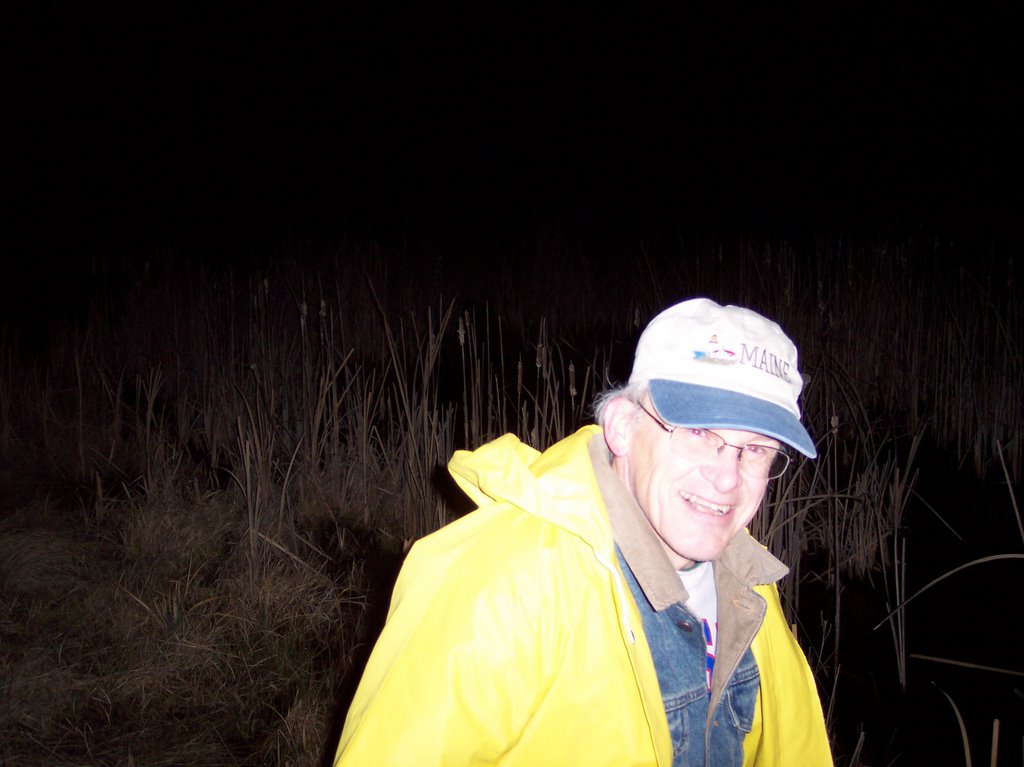
The Salamander Rescue was organized by Michael Caron shown here.


Mike is hoping that Tuesday will be a big salamander night. Hope they give the searchers a better clue as to which direction they want to go!


Other links:

Salamander pictures from Jeff Parmelee including A. texanum eggs:
(http://storm.simpson.edu/~parmelee/Herps/amphibians.html)

Save the Sacred Baker Wetlands(http://www.savethewetlands.org/) Has good links to photos from the wetlands. I especially enjoy Wally Emerson's photographs, (http://www.wallyemerson.com/wetlands/pageone/pages/BandofSunset.htm).

Wednesday, March 01, 2006

For Love of Insects


If you want to see a first rate scientific mind in action a good read is Thomas Eisner's For the Love of Insects(2003) from Harvard university Press. Dr. Eisner is a chemical ecologist from Cornell University and I bought the book in part because I had the pleasure of taking one of his classes but also because I am an entomologist by training. This book though is totally unlike any other entomology books because it shows Eisner in action as a scientist, shows the types of connections he makes when he is observing the natural world. Indeed he notes something that my students (or educators) don't seem to believe:

"...There has to be a readiness to make such connections. Every tidbit of new information, no matter how trivial, has the potential of amounting to more than a speck of color. Properly assigned to the pointillist canvas that constitutes your inner view, the new speck adds dimension to the vision."

This is after he as shown us through following little mysteries about the natural world that he investigated in his long 45 year career at Cornell. These little mysteries that so often we fail as instructors to take advantage of in teaching our students, even our majors so that they come out of our classes perhaps technically competent, able to master course objectives but unable to make the sorts of interconnections so important for critical thinking in biology.

Eisner's book will go down as a classic one that you will dip into over and over again.

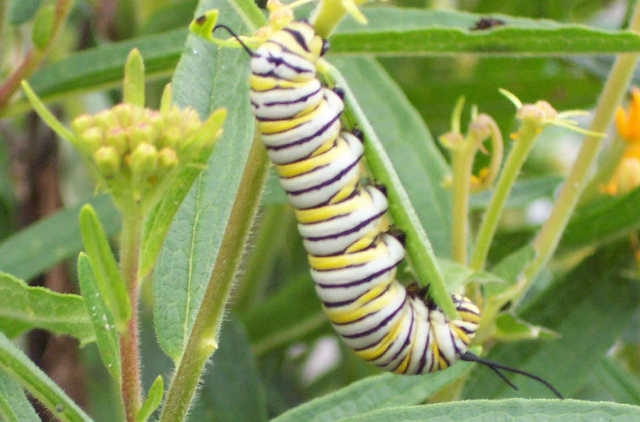
The image shows a monarch butterfly larva from my butterfly garden in 2005.

Other links:

Chemical Ecology: Archbold Biological Station: Biennial Report 1997-1998

Chemical Flower Deterrents

Thursday, February 23, 2006

Xtreme Worms

One of things I love talking about in biology are some of the extreme places where life can be found. For instance we know that certain single celled organisms in the Kingdom Archaea, live in environments that are either too hot, too cold or too salty or just about too extreme for any other living organisms. In fact, I like to call them the Xtreme sports specialists of biology. But other types of organisms give them a run for their money and have been broadening our understanding of where life, even complex life might be able to survive. The picture is of a Methane ice worm from http://www.mms.gov/eppd/sciences/esp/hydrates/

An article from Yahoo discusses a kind of worm, closely related to earthworms that thrive in glacial ice and in fact seem able to carry out their entire life in and on ice. Given that these worms are "cold blooded" and quite tiny as well, that is quite a feat. In fact these worms apparently die at temperatures above 40 degrees F. How they survive the cold is not entirely clear.

One possibility is that they have enzymes that work best at low temperatures, perhaps modified circulatory fluid. One intriguing report has looked at a wide range of these cold thriving organisms or psychrophiles found in four kingdoms of life and found that at least part of the secret to how they thrive in the cold involves increasing the concentration of AMP, ADP and ATP, energetically important compounds. By keeping the concentration of these important compounds high, the organisms appear to compensate for reduced enzyme activity since higher concentrations of reactants increases the rate of chemical reactions.

It turns out that when you search for "ice worm", a second kind of ice worm will come up. This second one lives also at cold temps but rather than glaciers this worm live around deposits of methane hydrate. These worms are also annelids as are the glacier ice worms but they belong to a different group of annelids called Polychetes. More about these worms and other pictures: http://www.science.psu.edu/alert/iceworms.htm

Links\s and references:

Glacier ice worms:

Napolitano, Michael F and Daniel H, Shain (2004) Four Kingdoms on glacier ice:convergent energetic processes boost energy levels as temperatures fall. Proc R Soc. Lond. B(Suppl) 271:S273-S276. http://www.resa.net/nasa/xlife_intro.htm

Life in Extreme Environments (http://www.astrobiology.com/extreme.html) has a good review of extremophiles-organisms that thrive in extreme environments.

Life at High Temperatures (http://www.bact.wisc.edu/bact303/b1) focuses on thermophiles(heat loving organisms) found in Yellowstone National Park. One caution many of what the author, Thomas Brock, refers to as bacteria are really in the Kingdom Archaea.

Introduction to the Archaea: Life's Extremists (http://www.ucmp.berkeley.edu/archaea/archaea.html)